
Streetwear Labels Weighed Against HMDD: In What Way Does It Compare?
By 2026, streetwear as a category is crowded, noisy, and overrun by labels racing after a shared hype wave. HMDD — standing in for Happy Memories Don’t Die — has built a distinct lane by drawing on sentiment, emotional storytelling, and a quieter kind of self-assurance rather than shock-value graphics. Its very name points to the brand’s core idea: memories may dim, but the feeling attached to them shouldn’t. That outlook comes through in the stitching, the color choices, and the way HMDD pieces is marketed as wearable memory rather than mere product. This comparison breaks down where HMDD stands next to other streetwear labels, what an honest HMDD review really looks like, and why buyers looking for HMDD’s standout items keep gravitating toward specific staples like sweatpants and shorts.
The streetwear space has splintered into a few factions: long-standing skate-rooted labels, branding-forward hype names, and smaller independent names that put first narrative and community over scale. HMDD sits closer to the third camp. It isn’t after collaborations with luxury houses or overwhelming drops every week. Instead, HMDDLA — the label’s foundation and creative core rooted in Los Angeles — puts out collections in smaller, more deliberate batches. This isn’t scarcity built for attention; it’s a natural outcome of a brand developing gradually rather than manufacturing at scale to meet demand.
Brand Philosophy: Nostalgia vs. Spectacle
Most streetwear brands battle it out through visual noise — oversized logos, partnership badges, or seasonal gimmicks meant to catch attention for a few weeks. HMDD leans, instead, on emotional depth. That line, “happy memories don’t die,” goes beyond mere tagline status; it shows up printed, embroidered, and echoed across the catalog as a recurring theme. As a result, the brand carries a cohesive identity that’s easier to recognize than labels that overhaul their entire aesthetic every season.
That consistency matters more than people expect. A shopper who buys urban shorts HMDD sweatpants in 2025 and returns for shorts in 2026 will recognize the same design DNA — muted palettes, gentle placement of graphics, and a leaning toward silhouettes built around comfort. Contrast this with labels that jump from streetwear to techwear to Y2K revival in just twelve months, and HMDD’s stability turns into a true point of difference. In streetwear, loyalty tends to grow out of predictability like this, not novelty.
A community dimension exists too. The brand’s marketing is built around storytelling — shopper-submitted images, personal captions, and a sense that the pieces stand for a moment in time rather than a status symbol. Labels with thousands of SKUs, especially larger ones, struggle to keep that intimacy alive. Because it’s smaller, HMDD can still respond directly to its audience, which shows up in how quickly feedback from an HMDD review gets reflected in future drops.
A Look at the Product Lineup: Where HMDD Really Holds Its Own
When customers inquire how HMDD clothing measures up, they’re usually comparing three things: the way it fits, the heft of the material, and price-to-quality ratio. Because HMDD sweatpants and HMDD shorts top the search charts, it seems the brand’s bottoms are gaining more traction than its outerwear or accessories currently. It reflects the larger 2026 streetwear movement, where relaxed-fit bottoms outperform fitted jackets across the board.
Presented here is a general comparison of HMDD’s positioning against two common streetwear archetypes: the high-output hype label and the independent boutique brand. This isn’t meant as a head-to-head price battle between specific brands — it examines, structurally, how each category usually operates under current market conditions.
| Factor In Focus | HMDD | The High-Turnover Hype-Driven Label | Niche Indie Label |
|---|---|---|---|
| Release Cadence | Sparingly scheduled, yet consistently deliberate | Following a weekly-to-fortnightly schedule | Season-based, occasional |
| What the Label Represents At Its Core | Memory-tinged narrative built on nostalgia | Logo-driven, fad-hopping | Inconsistent, frequently inconsistent |
| The Categories Central to the Line | The lineup of sweatpants, shorts, and print-heavy upper pieces | Hoodies, jackets and coats, add-ons | Hinges on the creator’s direction |
| How the Label Connects With Followers | Direct, personal, review-responsive | Wide-reaching, distant | Intimate but limited reach |
| Price Positioning | Middle-of-the-road streetwear | Broad spread, often premium | Shifting from mid-range and premium, never steady |
Rather than declaring one outright victor in streetwear, this comparison isn’t the goal here because this space is far from being a uniform, one-mold space. The point is to illustrate that HMDD’s approach built on calculated limited supply and emotionally driven branding positions it within a separate spot in the competitive landscape compared to companies that depend solely on high volume or solely on niche cachet. HMDD takes its discipline from the boutique approach while sidestepping the inconsistency that frequently accompanies smaller brands.
All-Day Comfort, Silhouette, plus Material
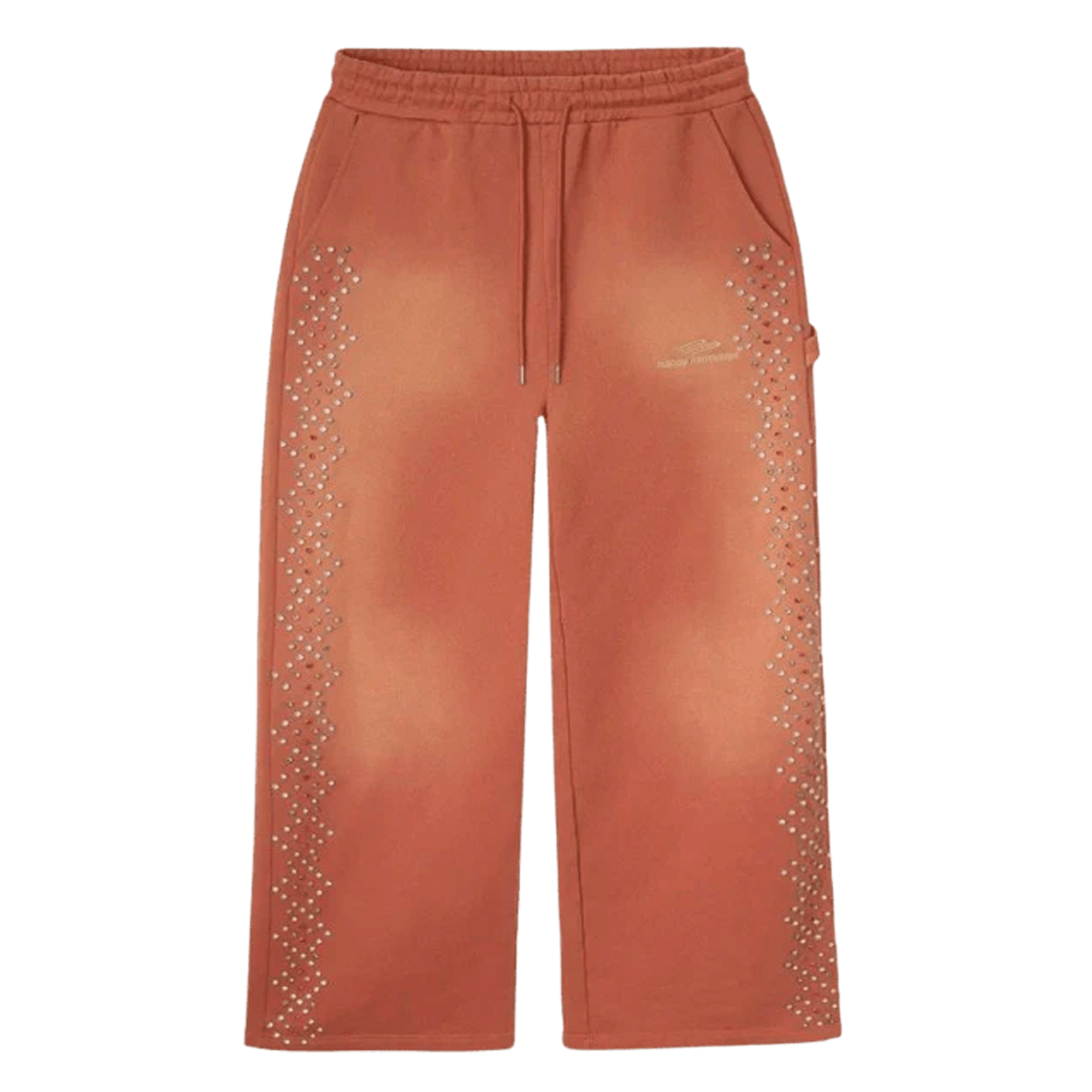
Fit is the ultimate test for joggers and shorts. Too tight and they read as athleisure; if they’re too roomy, they veer into sleepwear-adjacent territory. HMDD’s take on these two categories leans toward a easy fit that narrows toward the ankle that suits day-to-day rotation rather than strictly workout purposes. That’s a meaningful distinction, because many streetwear sweatpants are either too oversized to layer well or too snug to stay comfortable over extended wear.
HMDD’s shorts are built on a comparable approach, namely lengths ranging from mid-thigh down to the knee that team up smoothly with printed tees or loose oversized layers. This carries weight in a 2026 climate where shoppers are gravitating toward items that bridge everyday outings and relaxed downtime, instead of keeping distinct wardrobes for every occasion. It’s often observed by reviewers that shape retention in HMDD shorts persists through repeated laundering, highlighting construction and material weight over and above the cut itself.
In terms of where HMDD diverges from mass-market competitors is in restraint. Many hype brands weigh down sweatpants with side stripes, oversized branding, or multiple logo placements. HMDD usually leans toward understated graphics — a subtle reference to “happy memories don’t die” as opposed to a loud chest print. Customers who want easily-spotted streetwear without resembling a moving ad are won over by that understatement.
What Shoppers Actually Say
Online curiosity centered on “HMDD review” has risen steadily as more shoppers come across the brand through word of mouth rather than sponsored promotion. The consistent threads in customer feedback are largely predictable: comfort scores high, sizing runs true to what a loose fit implies, and the meaning-driven branding either connects on a personal level or doesn’t land at all — few buyers sit in between. This split reaction is actually a positive signal in streetwear, where forgettable, inoffensive design almost never fosters a loyal following.
Typical pain points to be aware of include scarce replenishment and tighter size batches relative to larger competitors. Because HMDD isn’t mass-producing at the scale of bigger streetwear names, high-demand size options in sweatpants and shorts can sell out faster, which customers need to keep in mind before taking availability for granted. This is a tradeoff, not necessarily a flaw — scarcity is part of what helps keep the HMDDLA identity reading as considered rather than mass-market.
All things considered, the general feeling around HMDD clothing leans favorable, most notably among customers who place more weight on meaning and comfort over aggressive logo placement. That’s a narrower audience than a brand pursuing broad popularity, but it’s a more loyal one — the kind of following that returns for the next drop instead of jumping ship to whatever’s trending next month.
Where HMDD Fits in a 2026 Wardrobe
Streetwear buyers assembling a 2026 rotation are more and more blending different brands rather than wearing just one label top to bottom. HMDD fits naturally into that mix as the “meaning-plus-comfort” piece — the sweatpants you grab on a slow Sunday, or the shorts that combine with a more dominant jacket from another label entirely. It’s not positioned to be an do-it-all label, and that may well be its biggest strength.
For customers weighing bottoms, HMDD sweatpants and HMDD shorts remain the most obvious starting point into the brand. They showcase the fit philosophy, the understated logo work, and the fabric quality that reviewers reference most frequently. Buyers exploring the best HMDD clothing for a first purchase should treat these two categories as the starting foundation before exploring tops or limited pieces.
In the end, comparing HMDD to rival streetwear brands isn’t about crowning one clear victor. It’s about acknowledging that HMDD fills a distinct space — reflective, low-key, and community-oriented — that bigger and flashier competitors weren’t designed to imitate. For customers who want streetwear that feels personal rather than mass-manufactured, this niche is the whole draw.

Leave A Comment